Showing posts with label peer effects. Show all posts
Showing posts with label peer effects. Show all posts
Tuesday, April 24, 2012
Peer Effects: Experimenting with Buddies
Experimenting with Buddies
Science, 2 December 2011, Vol. 334, no. 6060, pp. 1220-1221
Marco J. van der Leij
Center for Nonlinear Dynamics in Economics and Finance, University of Amsterdam.
Tinbergen Institute, Burg. Research Department, De Nederlandsche Bank.
Abstract: Go to any social gathering in your neighborhood and you will notice that people interact mostly with others who are similar in terms of age, gender, race, attributes, and behaviors. This tendency of people to have similar friends—known as homophily—is one of the most pervasive features of social networks (1). A key question is how much of the homophily in behavior can be attributed to social diffusion, that is, direct causal influence of one person on another through social ties (2, 3). Results from two clever Internet experiments reported by Centola last year (4) and on page 1269 of this issue (5) shed light on how the particular arrangement of social ties promotes social diffusion.

Wednesday, November 17, 2010
It pays not to know your colleagues' pay
People like you get on my nerves. That is, if you are paid more than I am. And if we work together. Apart from that you're fine. This is on the basis of this recent NBER paper which looks at how work satisfaction is diminished when people find out how much more their colleagues are paid. Knowing how much less some colleagues are paid on the other hand doesn't matter. So there is envy but no smugness. That's something I suppose. Sometimes a little knowledge is a dangerous thing.
Inequality at Work: The Effect of Peer Salaries on Job Satisfaction
David Card, Alexandre Mas, Enrico Moretti, Emmanuel Saez
Economists have long speculated that individuals care about both their absolute income and their income relative to others. We use a simple theoretical framework and a randomized manipulation of access to information on peers' wages to provide new evidence on the effects of relative pay on individual utility. A randomly chosen subset of employees of the University of California was informed about a new website listing the pay of all University employees. All employees were then surveyed about their job satisfaction and job search intentions. Our information treatment doubles the fraction of employees using the website, with the vast majority of new users accessing data on the pay of colleagues in their own department. We find an asymmetric response to the information treatment: workers with salaries below the median for their pay unit and occupation report lower pay and job satisfaction, while those earning above the median report no higher satisfaction. Likewise, below-median earners report a significant increase in the likelihood of looking for a new job, while above-median earners are unaffected. Our findings indicate that utility depends directly on relative pay comparisons, and that this relationship is non-linear.
Inequality at Work: The Effect of Peer Salaries on Job Satisfaction
David Card, Alexandre Mas, Enrico Moretti, Emmanuel Saez
Economists have long speculated that individuals care about both their absolute income and their income relative to others. We use a simple theoretical framework and a randomized manipulation of access to information on peers' wages to provide new evidence on the effects of relative pay on individual utility. A randomly chosen subset of employees of the University of California was informed about a new website listing the pay of all University employees. All employees were then surveyed about their job satisfaction and job search intentions. Our information treatment doubles the fraction of employees using the website, with the vast majority of new users accessing data on the pay of colleagues in their own department. We find an asymmetric response to the information treatment: workers with salaries below the median for their pay unit and occupation report lower pay and job satisfaction, while those earning above the median report no higher satisfaction. Likewise, below-median earners report a significant increase in the likelihood of looking for a new job, while above-median earners are unaffected. Our findings indicate that utility depends directly on relative pay comparisons, and that this relationship is non-linear.
Monday, November 15, 2010
Peer effects and fitness
This paper addresses whether fitness is contagious arising from recent claims that such peer or contagion effects may partly explain the increase in obesity. It is worth noting that the data is drawn from students at the US Air Force Academy, a very selective institution with a generally pretty fit bunch of people. It seems doubtful that this data will allow one to identify anything about obesity in the population.
Is Poor Fitness Contagious? Evidence from Randomly Assigned Friends
Scott E. Carrell, Mark Hoekstra, James E. West
NBER w16518
The increase in obesity over the past thirty years has led researchers to investigate the role of social networks as a contributing factor. However, several challenges make it difficult to demonstrate a causal link between friends’ physical fitness and own fitness using observational data. To overcome these problems, we exploit data from a unique setting in which individuals are randomly assigned to peer groups. We find statistically significant peer effects that are 40 to 70 percent as large as the own effect of prior fitness scores on current fitness outcomes. Evidence suggests that the effects are caused primarily by friends who were the least fit, thus supporting the provocative notion that poor physical fitness spreads on a person-to-person basis.
Is Poor Fitness Contagious? Evidence from Randomly Assigned Friends
Scott E. Carrell, Mark Hoekstra, James E. West
NBER w16518
The increase in obesity over the past thirty years has led researchers to investigate the role of social networks as a contributing factor. However, several challenges make it difficult to demonstrate a causal link between friends’ physical fitness and own fitness using observational data. To overcome these problems, we exploit data from a unique setting in which individuals are randomly assigned to peer groups. We find statistically significant peer effects that are 40 to 70 percent as large as the own effect of prior fitness scores on current fitness outcomes. Evidence suggests that the effects are caused primarily by friends who were the least fit, thus supporting the provocative notion that poor physical fitness spreads on a person-to-person basis.
Saturday, June 26, 2010
Identifying Peer Effects Through Variance Restrictions
Kevin’s post on peer effects mentioned the problem of identification, an example of a less standard approach to this issue is the paper by Graham (IDENTIFYING SOCIAL INTERACTIONS THROUGH CONDITIONAL VARIANCE RESTRICTIONS, BRYAN S. GRAHAM, Econometrica, Vol.76, No. 3 (May, 2008), 643–660), which uses variance restrictions to argue that peer effects were important for participants in the Tennessee STAR class size experiment. The intuition is described below (from p.4):
“The application examines the effect of peer quality on kindergarten achievement using data from the Tennessee class size reduction experiment Project STAR. Classrooms of two sizes are observed in the data set: small and large. Students and teachers within participating schools were randomly assigned to one of the two types of classrooms. In large classrooms, clusters of talented students are typically offset by corresponding clusters of below average students, resulting in little variation in mean student ability. In small classrooms, however, groups composed of mostly above or below average students are more frequently observed, generating greater variation in mean ability. As a result, the variance of peer quality (as measured by average student ability in a classroom) is greater across the set of small than it is across the set of large classrooms. In contrast to peer quality, random assignment ensures that the distribution of teacher characteristics is similar across the two types of classrooms. Under some additional restrictions on the educational production function, discussed in detail below, class type provides a plausible source of exogenous variation in the variance of peer quality”.
“The application examines the effect of peer quality on kindergarten achievement using data from the Tennessee class size reduction experiment Project STAR. Classrooms of two sizes are observed in the data set: small and large. Students and teachers within participating schools were randomly assigned to one of the two types of classrooms. In large classrooms, clusters of talented students are typically offset by corresponding clusters of below average students, resulting in little variation in mean student ability. In small classrooms, however, groups composed of mostly above or below average students are more frequently observed, generating greater variation in mean ability. As a result, the variance of peer quality (as measured by average student ability in a classroom) is greater across the set of small than it is across the set of large classrooms. In contrast to peer quality, random assignment ensures that the distribution of teacher characteristics is similar across the two types of classrooms. Under some additional restrictions on the educational production function, discussed in detail below, class type provides a plausible source of exogenous variation in the variance of peer quality”.
Thursday, June 24, 2010
Peer effects
"Tell me your friends and I will tell you who you are" my primary school teacher Mr Moriarty used to advise us. This could have simply been a statement about correlation but I think implicitly he was thinking of a treatment effects model: he wanted us to to stay away from the gurriers in the class (of whom there were some spectacular examples) as he thought they would lead us into bad ways. I actually didn't need any advice to avoid the thugs.
Anyway, this basic notion of the importance of peer effects is pervasive and in the academic literature goes back to the famous Coleman report in 1966. It spawned a big empirical literature which seems to have shown that, in education at least, peer effects are small and estimates quite fragile. Recent theoretical developments, by people such as Durlauf & Benabou, have highlighted the potential importance of such interactions.
A big problem in such models is identification: it is not a simple matter to identify parameters of interest. This is especially true if you want to distinguish between endogenous peer effects (when my outcome depends on your outcome) as well as contextual effects (when my outcome depends on your characteristics as well as my own). Identifying these separate effects is important if one wants the estimates to be useful for policy purposes since it is essential to know what is causing the peer effect. Endogenous membership (sorting into peer groups) as well as standard correlated ubobservables makes these quite tricky to estimate.
A really good outline of the issues involved is the paper by Robert Moffitt . A recent application in this area is a paper by Devereux et al.
Anyway, this basic notion of the importance of peer effects is pervasive and in the academic literature goes back to the famous Coleman report in 1966. It spawned a big empirical literature which seems to have shown that, in education at least, peer effects are small and estimates quite fragile. Recent theoretical developments, by people such as Durlauf & Benabou, have highlighted the potential importance of such interactions.
A big problem in such models is identification: it is not a simple matter to identify parameters of interest. This is especially true if you want to distinguish between endogenous peer effects (when my outcome depends on your outcome) as well as contextual effects (when my outcome depends on your characteristics as well as my own). Identifying these separate effects is important if one wants the estimates to be useful for policy purposes since it is essential to know what is causing the peer effect. Endogenous membership (sorting into peer groups) as well as standard correlated ubobservables makes these quite tricky to estimate.
A really good outline of the issues involved is the paper by Robert Moffitt . A recent application in this area is a paper by Devereux et al.
Wednesday, March 10, 2010
Some Links
1. It's not your peers, and it's not your friends: Some progress toward understanding the educational peer effect mechanism
2. Econometric Methods for Causal Evaluation of Education Policies and Practices:
A Non-Technical Guide
3. Denis the Dentist: people disproportionately choose careers whose labels resemble their names
4. http://www.babynamewizard.com/
5. Penelope Trunk: Brazen Careerist
6. Randomness, Luck, and other Situational Sources of Success and Failure
7. Why jobs obtained through networks may lower your earnings
8. Vive la Révolution!: Long term returns of 1968 to the angry students
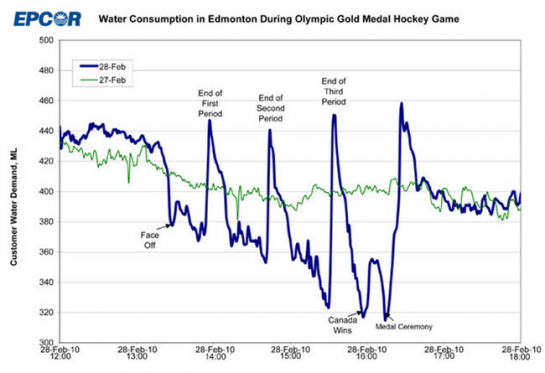
9. Simultaneous behaviour: during the Winter Olympics in Edmonton (Canada) (HT: Eoin Rouine)
2. Econometric Methods for Causal Evaluation of Education Policies and Practices:
A Non-Technical Guide
3. Denis the Dentist: people disproportionately choose careers whose labels resemble their names
4. http://www.babynamewizard.com/
5. Penelope Trunk: Brazen Careerist
6. Randomness, Luck, and other Situational Sources of Success and Failure
7. Why jobs obtained through networks may lower your earnings
8. Vive la Révolution!: Long term returns of 1968 to the angry students
9. Simultaneous behaviour: during the Winter Olympics in Edmonton (Canada) (HT: Eoin Rouine)
Thursday, September 17, 2009
Classroom Peer Effects and Academic Achievement: Evidence from a Chinese Middle School
SCID Working Paper 366; 07/1/08
Author(s): Katherine Carman, Lei Zhang
This paper estimates peer effects on student achievement using a panel data set obtained from a middle school in China. Two unique features of the organization of Chinese middle schools (Grades 7 to 9) and the panel data allow us to identify peer effects at classroom level; in particular, we are able to overcome difficulties that have hindered the separation of peer effects from omitted individual factors due to self-selection and from common teacher effects. First, students are assigned to a class at entry of middle school (Grade 7) and stay with their classmates together for all subjects and for all grades in middle school. In other words, any self-selection into a class occurs before the interaction with classmates. Thus, individual fixed effects can capture all omitted student and family characteristics relevant for selection. Second, each teacher of Math, English, and Chinese teaches two classes and stay with the same two classes from Grade 7 to Grade 9. This panel nature allows us to use teacher by test fixed effects to capture the time-varying common teacher effect. We estimate peer effects for Math, English, Chinese, and overall test scores separately. In a linear-in-means model controlling for both individual and teacher-by-test fixed effects, peers are found to have a positive and significant effect on math and overall test scores and a positive but insignificant effect on Chinese test scores, but no effect on English test scores. Additionally, students at the middle of the ability distribution tend to benefit from better peers, whereas students at both ends do not.
Author(s): Katherine Carman, Lei Zhang
This paper estimates peer effects on student achievement using a panel data set obtained from a middle school in China. Two unique features of the organization of Chinese middle schools (Grades 7 to 9) and the panel data allow us to identify peer effects at classroom level; in particular, we are able to overcome difficulties that have hindered the separation of peer effects from omitted individual factors due to self-selection and from common teacher effects. First, students are assigned to a class at entry of middle school (Grade 7) and stay with their classmates together for all subjects and for all grades in middle school. In other words, any self-selection into a class occurs before the interaction with classmates. Thus, individual fixed effects can capture all omitted student and family characteristics relevant for selection. Second, each teacher of Math, English, and Chinese teaches two classes and stay with the same two classes from Grade 7 to Grade 9. This panel nature allows us to use teacher by test fixed effects to capture the time-varying common teacher effect. We estimate peer effects for Math, English, Chinese, and overall test scores separately. In a linear-in-means model controlling for both individual and teacher-by-test fixed effects, peers are found to have a positive and significant effect on math and overall test scores and a positive but insignificant effect on Chinese test scores, but no effect on English test scores. Additionally, students at the middle of the ability distribution tend to benefit from better peers, whereas students at both ends do not.
Subscribe to:
Posts (Atom)