Graduate students getting a rough time on televison again! Thanks to Fearghal for the link.
Showing posts with label graduate education. Show all posts
Showing posts with label graduate education. Show all posts
Saturday, August 14, 2010

Wednesday, March 17, 2010
The Simpsons on Grad School
I posted before about the Simpsons clip: "Bart, Don't Make Fun of Grad. Students, They Just Made a Terrible Life Choice". Thanks to Svetlana Batrakova for pointing out that there is a YouTube compilation of "comments made by The Simpsons about PhDs and grad students". See below!
Wednesday, March 10, 2010
Some Links
1. It's not your peers, and it's not your friends: Some progress toward understanding the educational peer effect mechanism
2. Econometric Methods for Causal Evaluation of Education Policies and Practices:
A Non-Technical Guide
3. Denis the Dentist: people disproportionately choose careers whose labels resemble their names
4. http://www.babynamewizard.com/
5. Penelope Trunk: Brazen Careerist
6. Randomness, Luck, and other Situational Sources of Success and Failure
7. Why jobs obtained through networks may lower your earnings
8. Vive la Révolution!: Long term returns of 1968 to the angry students
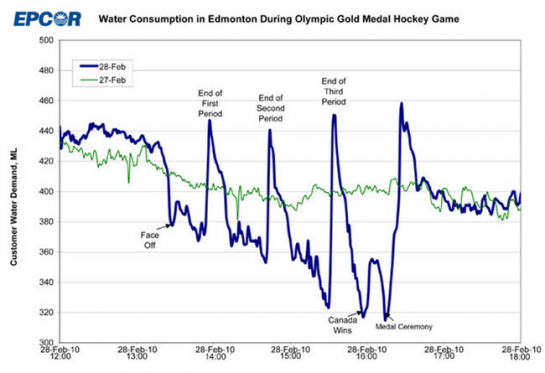
9. Simultaneous behaviour: during the Winter Olympics in Edmonton (Canada) (HT: Eoin Rouine)
2. Econometric Methods for Causal Evaluation of Education Policies and Practices:
A Non-Technical Guide
3. Denis the Dentist: people disproportionately choose careers whose labels resemble their names
4. http://www.babynamewizard.com/
5. Penelope Trunk: Brazen Careerist
6. Randomness, Luck, and other Situational Sources of Success and Failure
7. Why jobs obtained through networks may lower your earnings
8. Vive la Révolution!: Long term returns of 1968 to the angry students
9. Simultaneous behaviour: during the Winter Olympics in Edmonton (Canada) (HT: Eoin Rouine)
Thursday, February 25, 2010
A Few More Links
1. Do happy people have fewer heart attacks?
2. Obama advisor Austan Goolsbee on the importance of "the first job after graduation": NYT 2006
3. This week's U.S. jobs measure: payroll tax exemption, and tax breaks for capital expenditure
4. CIRGE: the Center for Innovation and Research in Graduate Education
5. Panel Conditioning and Attrition in the AP-Yahoo! News Election Panel Study
6. Tomorrow's edition of The Economist runs with the following lead-story: "The Data Deluge - and How To Handle It"
7. Job Opportunities at Yahoo!: the tech giant recently advertised for Ph.D. graduates in Microeconomics
2. Obama advisor Austan Goolsbee on the importance of "the first job after graduation": NYT 2006
3. This week's U.S. jobs measure: payroll tax exemption, and tax breaks for capital expenditure
4. CIRGE: the Center for Innovation and Research in Graduate Education
5. Panel Conditioning and Attrition in the AP-Yahoo! News Election Panel Study
6. Tomorrow's edition of The Economist runs with the following lead-story: "The Data Deluge - and How To Handle It"
7. Job Opportunities at Yahoo!: the tech giant recently advertised for Ph.D. graduates in Microeconomics
Monday, October 12, 2009
The Ph.D. Completion Project
Thanks to Michael Egan for flagging this upcoming conference for me: THE EVOLVING LANDSCAPE OF IRISH GRADUATE EDUCATION (IUA Fourth Level Network Annual Conference 2009). At the conference, Prof. Jon Butler will discuss Yale's participation in the US Council for Graduate Schools 'Ph.D. Completion Project'. More information on the Ph.D. Completion Project is available from http://www.phdcompletion.org/. "The Ph.D. Completion Project aims to produce the most comprehensive and useful data on attrition from doctoral study and completion of Ph.D. programs yet available." Some publications fom the project are available here.
On the subject of "graduate student attrition", I was recently reading some comments from a keynote address given by Claudia Mitchell-Kernan (Vice Chancellor for Academic Affairs and Dean of Graduate Division, University of California, Los Angeles) to an NSF workshop on graduate student attrition in the United States. Here's an excerpt: "Finally, let me address the cohort that offers the most difficulty for those of us interested in attrition. The students who drift away after being advanced to candidacy are often considered to be the most problematic. When these students leave, they leave at the greatest personal and societal cost." Here is a link to the entire summary of the NSF Workshop on Graduate Attrition.
Finally, related research by Stock, Finegan and Siegfried (AER, 2009) was mentioned on the blog before. It shows that finishing an economics Ph.D. within the designated time is affected by an array of factors, which I won't relay now. The authors conclude that "many considerations unique to individual students and faculty that we cannot measure—such as ambition, motivation, persistence, organizational skills, the creativity of students, and interest in students’ success as well as mentoring and motivational skills among graduate faculty — matter more than the myriad characteristics we were able to measure, which collectively account for less than 15 percent of the variation in completion among students." This suggests that non-cognitive ability plays an important role in Ph.D. completion.
On the subject of "graduate student attrition", I was recently reading some comments from a keynote address given by Claudia Mitchell-Kernan (Vice Chancellor for Academic Affairs and Dean of Graduate Division, University of California, Los Angeles) to an NSF workshop on graduate student attrition in the United States. Here's an excerpt: "Finally, let me address the cohort that offers the most difficulty for those of us interested in attrition. The students who drift away after being advanced to candidacy are often considered to be the most problematic. When these students leave, they leave at the greatest personal and societal cost." Here is a link to the entire summary of the NSF Workshop on Graduate Attrition.
Finally, related research by Stock, Finegan and Siegfried (AER, 2009) was mentioned on the blog before. It shows that finishing an economics Ph.D. within the designated time is affected by an array of factors, which I won't relay now. The authors conclude that "many considerations unique to individual students and faculty that we cannot measure—such as ambition, motivation, persistence, organizational skills, the creativity of students, and interest in students’ success as well as mentoring and motivational skills among graduate faculty — matter more than the myriad characteristics we were able to measure, which collectively account for less than 15 percent of the variation in completion among students." This suggests that non-cognitive ability plays an important role in Ph.D. completion.
Wednesday, September 30, 2009
Student-Advisor Matching and Early Career Publishing Success for Economics PhDs
Michael J. Hilmer; Christiana E. Hilmer
San Diego State University - Department of Economics
Economic Inquiry, Vol. 47, Issue 2, pp. 290-303, April 2009
Abstract:
San Diego State University - Department of Economics
Economic Inquiry, Vol. 47, Issue 2, pp. 290-303, April 2009
Abstract:
We examine a unique data set containing information on a PhD recipient’s dissertation advisor, graduate program, and early career publishing success. Regressions controlling for the ranking of both the student’s graduate program and dissertation advisor confirm that, all else equal, students working with prominent advisors are significantly more likely to publish in their early careers, especially in top 36 journals, than students working with less prominent advisors. Moreover, predicted publication values suggest that students attending lower ranked programs but working with superstar faculty publish both more total and top 36 articles and more quality-adjusted pages than students attending top-ranked programs but working with less prominent advisors.
Tuesday, May 19, 2009
Completing an Economics PhD in Five Years
Thanks to Christian for pointing out this paper published in the AER today (by Stock, Finegan and Siegfried). Endogeneity concerns aside, finishing your PhD within the designated time is positively affected by:
- larger 1st year PhD classes
- shared offices
- being male
- whether someone went to a top tier university for undergrad
Factors that have a negative effect are:
- doing your PhD with a top tier instution
- high attrition in the 2nd year
- pre-thesis research work requirement
- having an undergrad degree in economics
The authors conclude that "many considerations unique to individual students and faculty that we cannot measure—such as ambition, motivation, persistence, organizational skills, the creativity of students, and interest in students’ success as well as mentoring and motivational skills among graduate faculty—matter more than the myriad characteristics we were able to measure, which collectively account for less than 15 percent of the variation in completion among students."
Some insights on how non-cognitive personality constructs (such as ambition, motivation, persistence and organisation) apply to graduate education are provided in the Educational Assessmnet Journal (2005) by Patrick Kyllonen, Alyssa Walters and James Kaufman from the Princeton Educational Testing Service. We discussed this research on the blog before: here.
Stock and Siegfried (2006) reported on time-to-degree for economics Ph.D.'s in the United States in the AEA Papers and Proceedings. That research motivated me to consider that the duration of the Ph.D. process (or time-to-degree) may be a source of comparability problems in self-rated skills matching for Ph.D. graduates (see a previous post on skills-matching here).
The idea is that the more the individual has committed to the process of atatining a Ph.D., the more he or she will want to view the outcome of that process favourably. Taking a year longer during Ph.D. training implies a very particular opportunity cost. There is a precedent for this type of comparability-bias in the anchoring vignettes literature.
Buckley (2007) used the anchoring vignettes technique to investigate the "rose-coloured glasses" effect, which refers to parents reporting higher levels of satisfaction with a school solely or partially as a justification for the effort expended in the choice process. The analogy to 'time-to-degree' is about the amount of time expended in the Ph.D. process. (See a previous discussion of Buckley's research here).
- larger 1st year PhD classes
- shared offices
- being male
- whether someone went to a top tier university for undergrad
Factors that have a negative effect are:
- doing your PhD with a top tier instution
- high attrition in the 2nd year
- pre-thesis research work requirement
- having an undergrad degree in economics
The authors conclude that "many considerations unique to individual students and faculty that we cannot measure—such as ambition, motivation, persistence, organizational skills, the creativity of students, and interest in students’ success as well as mentoring and motivational skills among graduate faculty—matter more than the myriad characteristics we were able to measure, which collectively account for less than 15 percent of the variation in completion among students."
Some insights on how non-cognitive personality constructs (such as ambition, motivation, persistence and organisation) apply to graduate education are provided in the Educational Assessmnet Journal (2005) by Patrick Kyllonen, Alyssa Walters and James Kaufman from the Princeton Educational Testing Service. We discussed this research on the blog before: here.
Stock and Siegfried (2006) reported on time-to-degree for economics Ph.D.'s in the United States in the AEA Papers and Proceedings. That research motivated me to consider that the duration of the Ph.D. process (or time-to-degree) may be a source of comparability problems in self-rated skills matching for Ph.D. graduates (see a previous post on skills-matching here).
The idea is that the more the individual has committed to the process of atatining a Ph.D., the more he or she will want to view the outcome of that process favourably. Taking a year longer during Ph.D. training implies a very particular opportunity cost. There is a precedent for this type of comparability-bias in the anchoring vignettes literature.
Buckley (2007) used the anchoring vignettes technique to investigate the "rose-coloured glasses" effect, which refers to parents reporting higher levels of satisfaction with a school solely or partially as a justification for the effort expended in the choice process. The analogy to 'time-to-degree' is about the amount of time expended in the Ph.D. process. (See a previous discussion of Buckley's research here).
Wednesday, May 06, 2009
The Irish Social Sciences Platform
The Irish Social Sciences Platform (ISSP)is "an all-island platform of integrated social science research and graduate training focusing on the social, cultural and economic transformations shaping Ireland in the 21st century." ISSP will focus its efforts on investigating three broad themes of national importance – creating balanced development, sustaining communities and building the knowledge economy.
"A core undertaking of ISSP is the creation of a national social sciences graduate platform capable of delivering graduate research education. Graduate students will undertake taught courses, training workshops and summer schools, and have supervisory committees that span disciplines and partner institutions. The taught component will include modules on professional development,
methodology and specialist areas."
"A core undertaking of ISSP is the creation of a national social sciences graduate platform capable of delivering graduate research education. Graduate students will undertake taught courses, training workshops and summer schools, and have supervisory committees that span disciplines and partner institutions. The taught component will include modules on professional development,
methodology and specialist areas."
Friday, March 27, 2009
Internationalization of U.S. Doctorate Education
This isn't a new story, but John Bound, Sarah Turner and Patrick Walsh flesh out the history of this trend in a recent NBER working paper.
Wednesday, March 18, 2009
"Bart, Don't Make Fun of Grad. Students, They Just Made a Terrible Life Choice"
Thanks to the Organizations and Markets Blog for pointing out this clip from the Simpsons where Bart explains graduate school. I can think of a few Matt Groening fans in Geary who should get a kick out of this. Another take on grad school by Groening is available here. While all of this may seem quite entertaining in cartoon sketches, we should bear in mind that there are some very serious aspects to Ph.D. graduates' skills-matching and the non-cognitive aspects of Ph.D. student persistence. These have been discussed on this blog before (follow the links). Also related is Lex Borghan's and Bart Golsteyn's (not Simpson!) work on "Skill Transferability, Regret and Mobility".

Monday, March 09, 2009
Noncognitive Constructs and Their Assessment in Graduate Education
Some insights on how non-cognitive personality constructs apply to graduate education are provided in the Educational Assessmnet Journal (2005) by Patrick Kyllonen, Alyssa Walters and James Kaufman from the Princeton Educational Testing Service and Department of Psychology, California State University at San Bernardino. The authors review the literature on noncognitive constructs, as well as personality as it specifically relates to graduate education.
In the first section, they review measures typically used in studies of graduate school outcomes, such as attrition and time to degree. They also review which student qualities faculty and administrators said they desired and cultivated in graduate programs. (They noted that there are many qualities faculty ranked high in desirability but which could only imperfectly be gleaned from sources such as letters of recommendation and personal statements).
In the second section, they review general personality factors (such as the “Big Five”), and conclude with a discussion of how personality factors might be used in admissions and guidance applications for graduate education.
In the first section, they review measures typically used in studies of graduate school outcomes, such as attrition and time to degree. They also review which student qualities faculty and administrators said they desired and cultivated in graduate programs. (They noted that there are many qualities faculty ranked high in desirability but which could only imperfectly be gleaned from sources such as letters of recommendation and personal statements).
In the second section, they review general personality factors (such as the “Big Five”), and conclude with a discussion of how personality factors might be used in admissions and guidance applications for graduate education.
Subscribe to:
Posts (Atom)