Monday, December 30, 2013

ESRC Collaborative PhD Award Competition

The Collaborative Award Competition
The Scottish Graduate School of Social Science is delighted to announce that the Collaborative Competition will run again in 2014. Up to 9 PhD studentships in social science subjects will be co-funded. The awards will likely commence in October 2014.

Proposals from academics across the SGS-DTC accredited pathways are welcome.

‘Collaborative’ is defined broadly and covers collaboration with private sector companies, public sector bodies or voluntary organisations. The SGS-DTC Board has allocated up to 9 awards to the collaborative studentship competition for 2014.

Time Frame
Deadline for applications: Mon 10 February 2014

Decisions communicated to applicants: Mon 10 March 2014

Further Details
Interested parties should download and read the guidance notes.

The application form is available for download here.

Behavioural Science Workshop Series

Context & Aims: The purpose of this ESRC funded workshop series is to bring together economics and psychology researchers in key areas of research and practice to discuss open questions on measurement in behavioural and social sciences. The workshops are being coordinated by Michael Daly, Liam Delaney, Leonhard Lades and Alex Wood of the Behavioural Science Centre at the University of Stirling School of Management with considerable input from other members of the centre. There are three main themes of the workshops outlined below.

First, whilst the use of secondary datasets within economics is a primary methodology, awareness and use of these datasets remains low within psychology (as recently highlighted by both the ESRC and MRC). Such secondary datasets have started to contain a large number of constructs (such as personality at multiple time points) giving much scope for psychologists to benefit from these resources, were awareness and confidence higher in the field. The decades of experience within economics can bring much to psychology in terms of statistical expertise developed through long engagement with demonstrating causality and isolating effects in this kind of data.

Second, methods developed within psychology can be used to better collect economically-relevant data in both small and large studies. The development of novel measures (e.g. bio-tracking, real-time activity monitoring, day reconstruction and life-reconstruction methods) points to potential solutions to the constraints and limitations of traditional secondary databases. However, such developments also lead to open questions regarding the statistical properties and validity of such measures, their underlying assumptions, the impact of using non-probability or small samples, and the potential of these measures for examining substantive research questions at the national and cross-national levels. As with promoting the use of secondary datasets, improving measurement is a key challenge that can be best met through interdisciplinary research between economics and psychology.

Third, underpinning each of the priorities is a concern for individual well-being. This has particularly policy implications with the Office for National Statistics beginning to measure well-being on a national scale for the government to use to evaluate national progress alongside traditional economic indices. Increasingly it is emerging that socio-economic factors relate differently to well-being depending on how exactly well-being is conceptualised and measured. Building in such understanding to the design of future datasets and the formulation of policy recommendations remains a key challenge for furthering each of the priorities. Research within psychology has examined these issues in depth for decades, providing a strong impetus for better collaboration of this discipline with economics, where the study of subjective variables is still quite novel. 
Seminar Format : A series of six one-day workshops will be held in Management School at the University of Stirling. The workshops will be held over two years beginning in February 2014. The timings of subsequent workshops will be: May 2014, August 2014, October 2014, February 2015 and June 2015. Each workshop will bring together a total of eight leading academics and industry/policy researchers from the UK, Europe, and US who are committed to delivering a set of presentations that maps directly to a specific research theme as described below. Each workshop will have an attendance of 40 individuals including speakers. 

Participation Policy: A broad set of academic speakers and leading industry/policy researchers have committed to engage with the proposed seminar series. Our speakers are drawn primarily from economists and psychologists with strong complementary interests in behavioural economics and applied microeconomics. 

Details of the workshops will be made available below. Precise dates for the later workshops will be provided in due course. 

Workshop 1: "Measurement and Determinants of Well-Being": Stirling, February 21st 2014. 

The last decade has seen a dramatic increase in focus on human well-being in economics and psychology. Many large-scale national and international surveys have adopted diverse measures of well-being (e.g. positive affect, life-satisfaction, eudemonic well-being) and tracked change within these variables over time. This workshop will draw on the strengths of psychologists familiar with the theoretical nuances and psychometric properties of various measures of well-being and economists with experience in employing sophisticated time-series and quasi-experimental approaches to the analysis of well-being data. Speakers will present empirical findings detailing the link between diverse measures of well-being and economic and demographic factors. This workshop will act to highlight the potential of subjective well-being data and increase awareness of the analytic approaches used to address substantive research questions using large-scale secondary data sources. The workshop will open up debate with industry/policy researchers regarding the extent to which diverse well-being measures can inform and assist in the evaluation of economic policies. 

Workshop 2: Increasing the richness and frequency of social science survey data: Stirling, May 23rd 2014.

This workshop will showcase frontier approaches that aim to enhance the sophistication and the frequency with which social science data is collected. Speakers will outline innovative methodological tools and their application to key themes such as the measurement of well-being, behaviour, and attitudes. These include employing innovative measures of affect and behaviour, such as the Day Reconstruction Method (DRM), construction of representative longitudinal panel surveys and continuous surveys of cross-sections of the population that are capable of gauging patterns of welfare, behaviour, and opinions at the monthly or even daily level (e.g. American Life Panel (ALP); European Commission Flash Eurobarometer, Gallup-Healthways Well-Being Index).

Workshop 3: Secondary data and life-span models: Stirling, August 2014.

There is now an abundance of large government databases, which often assess detailed psychological, economic, and health measures in samples of tens of thousands of participants over several years or even decades. The initial workshop will address the ESRC’s priority objective of fostering research that capitalizes on the expanding data resources available in the Economic and Social Data Service (ESDS) archive and comparable international depositories. Speakers in this workshop will demonstrate how the precise psychometric measurement of constructs such as intelligence, temperament/personality, and adverse conditions initially and over several years of follow-up can be used to probe the mechanisms underlying the unfolding of economic, health and welfare outcomes as well as inequalities across these domains. The use of life-reconstruction to produce retrospective accounts of early conditions will be addressed, studies utilizing this data presented, and the limitations (e.g. recall, desirability biases) of this approach discussed.

Workshop 4: Preferences and personality: Stirling, October 2014

One of the major challenges in economics is understanding the statistical properties of measures of time, risk, and social preferences and evaluating the validity of such measures. This workshop will focus on empirical research examining economic preferences in laboratory and real-world settings. Speakers will address the reliability of traditional preference measures, their structure across demographic characteristics, innovations in measurement, and links between preference estimates and objective economic and biological measures. We have invited speakers who are engaged in the theoretical and empirical mapping of preference measures to personality traits which have been shown to have substantial predictive validity for important life outcomes (e.g. income, disease morbidity and mortality, employment). Taken together, this workshop will enhance cross-talk and expand the common conceptual ground that exists between personality psychologists and economists interested in the assessment of preferences in the UK and Europe. Furthermore, it will cultivate frontier thinking regarding the future data-collection priorities for social science in the UK and further afield.

Workshop 5: Biological markers in behavioural science: Stirling, February 2015.

Increasingly detailed assessments of biological markers of human functioning are now an important component of large-scale government surveys in the social sciences (e.g. NCDS, Add Health). In contrast to measures of health perceptions, biological measures are cardinal in nature and attractive to economists as potential outcome measures, for instance in labour and health economics.  Yet, understanding of measures of inflammatory, metabolic, neuroendocrine and cardiovascular functioning which are commonly used in the medical community remains limited amongst many social scientists. To address this issue this workshop will include talks from researchers who are leading the integration of biological measures into economics and psychology. The workshop will address the structure of the primary biological measures examined in social surveys and the potential biological basis of economic decisions.

Workshop 6: Behavioural science and public policy: Stirling, June 2015

The final workshop will be dedicated to the interface between behavioural science and public policy. Researchers involved in the empirical estimation of policy effects and in the understanding and shaping of the theoretical principles that inform policy have agreed to present. A key theme of this workshop will be the measurement and data needs and priorities of those conducting policy research and methods through which key measures such as well-being, preference parameters, personality, and biological measures could be integrated into policy research to a greater extent and the advantages that this approach may yield.

Sunday, December 29, 2013

Opportunities to Study or Work at the Centre

This post is intended as a snapshot of the opportunities to research or study at our research centre as of the end of 2013/beginning of 2014.

1. A full list of potential external sources of funding to conduct research here is available on this link

2. Details of our MSc are available on the link above. There are several full-fees scholarships available across a range of schemes.

3. Students who wish to conduct a PhD at the centre should look closely at PhD scholarship opportunities available through the ESRC. We are part of the Scottish Doctoral Training Centre and could potentially supervise behavioural topics in economics, advanced quantitative methods and management. Details of how to apply are available here.

4. We currently are advertising a fully funded PhD studentship in the area of behavioural economics and employment.

5. The School of Management regularly advertise faculty posts in areas such as management, finance and economics.

Wednesday, December 18, 2013

The 15 Best Behavioural Science Graphs of 2010-13

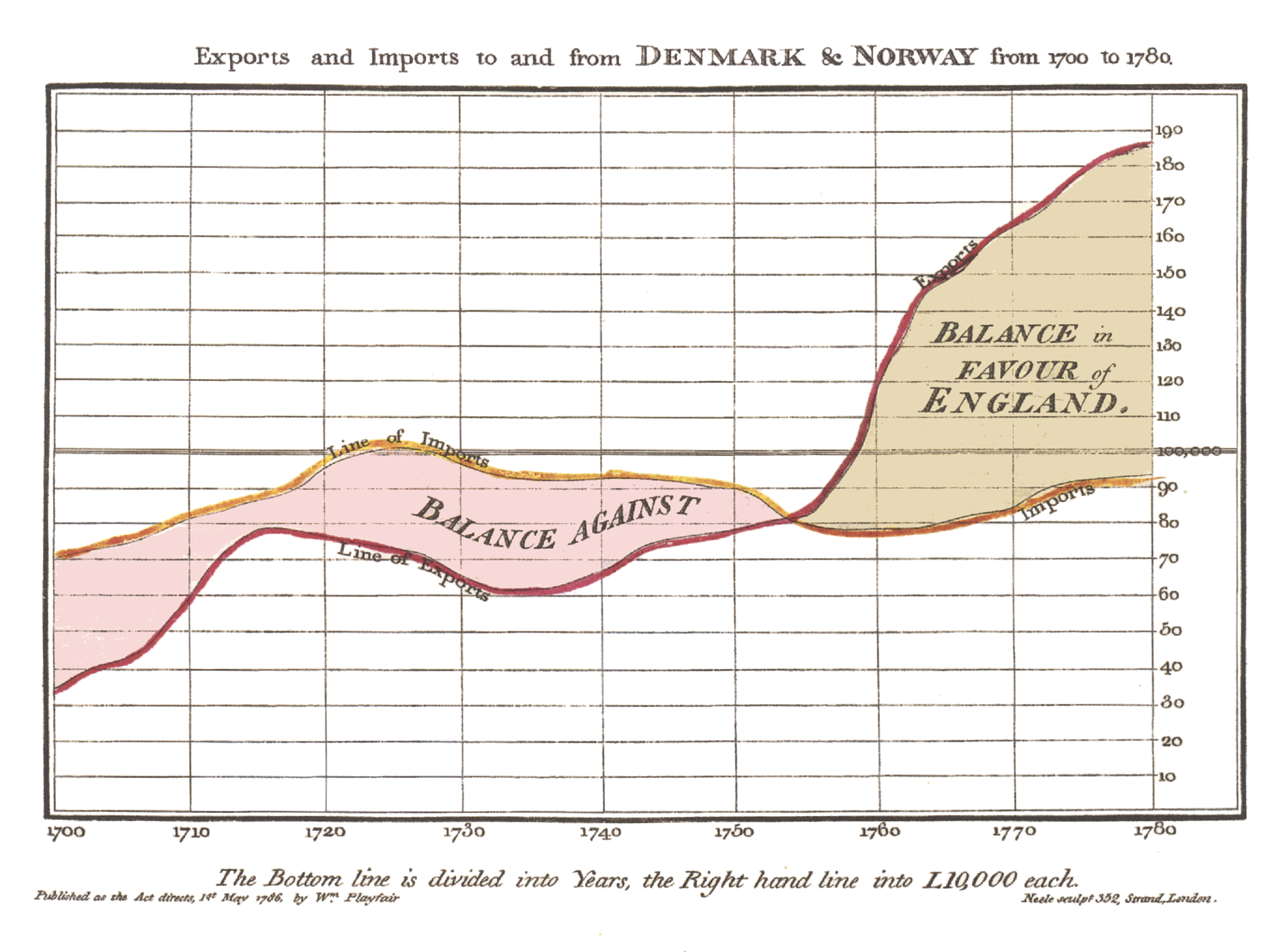
It was a Scotsman named William Playfair who invented statistical graphics in the 18th century, during that period when the Scots were building the modern world. Here is a lovely line graph of his from 1786 showing England's trade balance with Norway and Denmark.

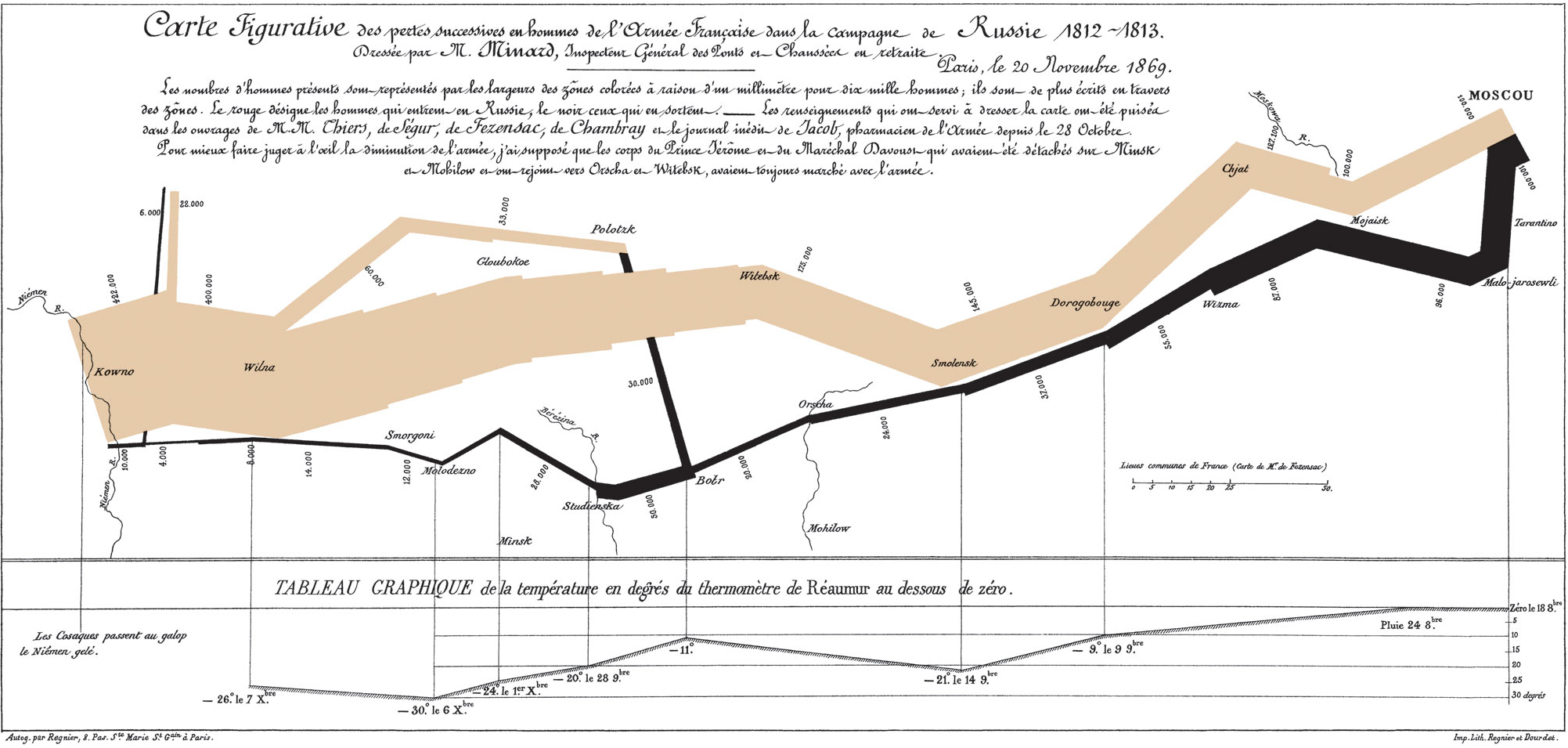
Playfair's work led to a veritable explosion of graph making in the 1800s. Graph hipsters among you will be familiar with Charles Minard's flow-map describing Napoleon's invasion of Russia in 1812. Created in 1869, modern-day graph maven Edward Tufte called it "the best statistical graphic ever drawn". The main variables it conveys are army size, spatial location, temperature and time. The beige line is the army on its way to Moscow, the black line is the return journey. The most striking thing about it is the incredible shrinkage of le Grande Armée as the Russians chip away at it for 6 months.

Here is a pdf of this image with the text written in English.

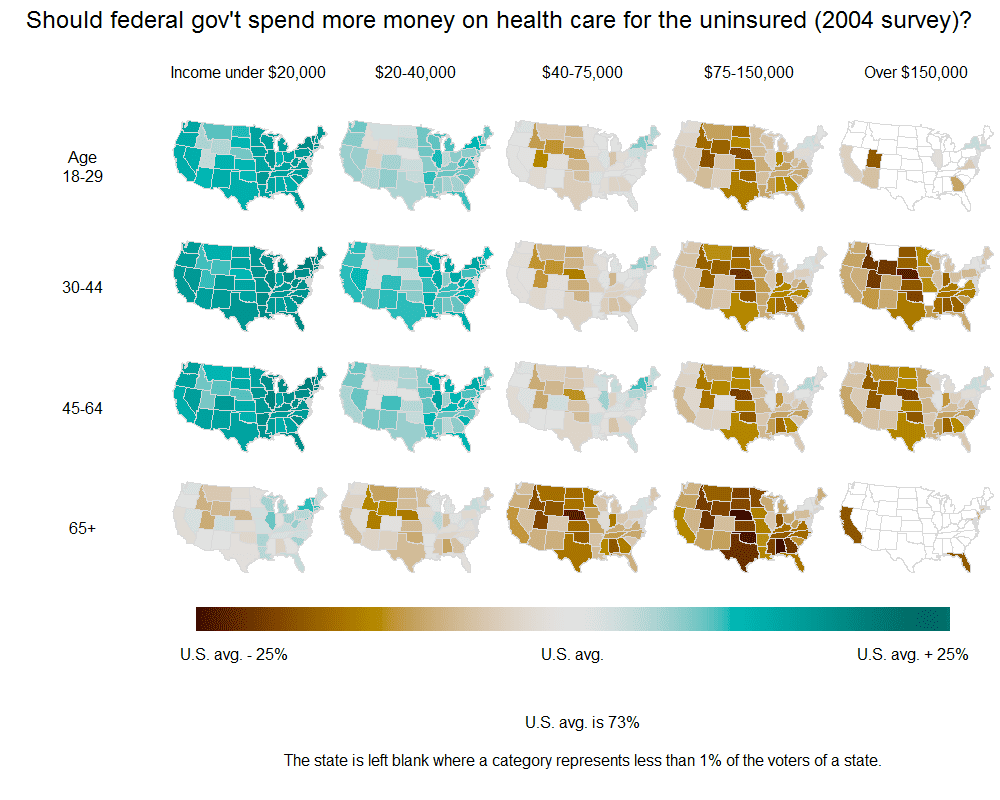
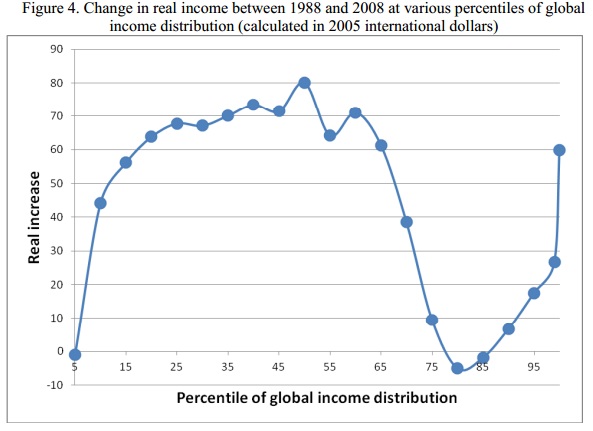
Economics is a discipline replete with graphs - see many examples in these "Best of" retrospectives by the BBC, Economist, Wonkblog and The Atlantic. Three of my personal favourites from across all of economics are: (1) Who Supports Health Care Reform in the U.S., (2) Changes in Real Income (1988-2008) by Percentiles of the Global Income Distribution and (3) the Mexican Lemon Imports - U.S. Highway Fatality Rate exposé.

Behavioural Science* has a similar abundance of interesting graphs but to date there hasn't been a retrospective on them. The approaching end of 2013 seems like a good time to do this. To that end, I asked people in the field as well as my colleagues in the Behavioural Science Centre for their favourite graph of the last 3 years. Many thanks to everyone for their recommendations.


THE 15 BEST BEHAVIOURAL SCIENCE GRAPHS 2010-13

(1) Benartzi & Thaler (2013), Behavioral Economics and the Retirement Savings Crisis, Policy Forum
Shlomo Benartzi and Richard Thaler have a graph showing an enormous growth trend over the last 10 years in the percentage of U.S. employers offering 401(k) plans that automatically enroll employees and automatically escalate savings rates (for example 3% savings this year increasing to 6% next year). This trend has been no doubt influenced by their Save More Tomorrow program which first implemented auto-escalating savings (see #4 here).


(2) Norton & Ariely (2011), Building a Better America-One Wealth Quintile at a Time, Perspectives on Psychological Science
Dan Ariely pointed me to a graph from his 2011 paper with Michael Norton about the American public's perception of wealth distribution in the United States. They asked a nationally representative sample (N= 5,221) what they considered to be the ideal wealth distribution in the U.S. and what they estimated it actually was. They then contrasted these numbers with the actual distribution. The results are rather jarring. Although the sample expressed a preference for a relatively equitable distribution, in reality the top 20% of Americans have around 85% of the wealth and the bottom two quintiles don't even register on the scale.

A YouTube user named politizane later looked at this data and turned it into this rather splendid video that justifiably went viral.


(3) Opower (2013)
John Balz recommends a lovely graph produced by the American utility company Opower showing how social traditions affect energy usage. The chart shows how average residential electricity consumption on 2012’s Super Bowl Sunday (broken up into 15-minute intervals) differed from a typical midwinter Sunday.


(4) Boyce, Wood & Brown (2010), The Dark Side of Conscientiousness, Journal of Research in Personality &
Boyce & Wood (2011), Personality Prior to Disability Determines Adaptation, Psychological Science
There is a famous 1978 study comparing the life satisfaction of recent lottery winners with a group who recently became paraplegic. The main finding was that those who won the lottery were not significantly happier day to day than those who had lost the ability to walk. That result, while striking, is however an average figure which potentially masks a lot of individual heterogeneity. It seems plausible that different kinds of people might react very differently to major life events and it seems reasonable that one factor governing the reaction might be personality. Centre members Christopher Boyce and Alex Wood have two graphs on that very topic, looking at differential responses to major life events as a function of personality traits.

Using an initial sample of 9,570, the graph on the left describes the life satisfaction of people who became unemployed in Year 1, broken down by +1SD and -1SD Conscientiousness. Although both groups become unhappier after becoming unemployed, by Year 3 the low C are ticking back up, while the high C group become more miserable.

The graph on the right uses a sample of 307 individuals who became disabled in Year 1, broken down by +1SD and -1SD Agreeableness. Those with high agreeableness recover to their original life satisfaction level by year 4 whereas the low group remain unhappy.


(5) Hoffman, Vohs & Baumeister (2012), What People Desire, Feel Conflicted About, and Try to Resist in Everyday Life, Psychological Science
Centre member Michael Daly nominated this wonderfully creative effort from Hoffman et al. This 4 dimensional graph shows the "degree to which participants’ desires conflicted with their goals as a function of the strength of the desire. The crossing horizontal and vertical lines indicate the grand means for conflict and strength in this sample. Results are shown for 14 different desire domains; the sizes of the pie charts represent the relative frequency of the desire. In each pie chart, the lighter portions indicate the probability of successfully controlling the desire (i.e., not enacting the desired behavior when attempting to resist it), whereas the darker portions indicate the probability of self-control failure".

So for example, eating (the largest pie-chart) is the desire which people feel most often and is resisted over three quarters of the time. Media use is the desire which people fail to resist the most.


(6) Falk & Szech (2013), Morals and Markets, Science.
Armin Falk sent a graph looking at the effect of market interaction on moral values. Specifically, he and his co-author hypothesized that market participation may corrode one's morals for three reasons: (i) Since it takes two people to make a trade, responsibility and guilt for an ethically dubious action may be diminished, (ii) markets reveal social information about prevailing norms - if I see you acting selfishly, I may be more inclined to be selfish as well and (iii) markets put a strong focus on negotiation and trading rather than the possible negative consequences of these actions.

This graph shows the percentage of participants in the authors' experiment who were willing to gas a mouse to death (for real) for a monetary equivalent of €10 or less. Those in the Individual group could either let the mouse live and get no money, or kill the mouse and get €10. The participants in the Bilateral and Multilateral Market groups were divided into buyers and sellers and had to bargain over killing a mouse for up to €20 split between them. In line with the hypotheses, those in the market groups were around 30 percentage points more likely to kill the mouse.


(7) Danziger, Levav & Avnaim-Pesso (2011), Extraneous factors in judicial decisions, PNAS.
This graph is my own nomination. This paper examined 1,112 judicial rulings over a 10 month period by eight judges in Israel. These judges presided over 2 parole boards for four major prisons, processing around 40% of all parole requests in the country. They considered 14-35 cases per day for an average of six minutes and they took two daily food breaks (a late morning snack and lunch), dividing the day into three sessions. 

The graph looks at the proportion of rulings in favor of parole by ordinal position (so 1st case of the day, then 2nd, then 3rd, etc). The circled points are the first decision in each of the three decision sessions, the tick marks on the x-axis denote every third case and the dotted line denotes a food break. The probability of the judges granting parole falls steadily from around 65% to nearly zero just before the break, before jumping back up again after they return to work.


(8) Mani, Mullainathan, Shafir & Zhao (2013), Poverty Impedes Cognitive Function, Science.
Several people nominated the graphs in this paper, the central hypothesis of which is that poverty directly worsens cognitive performance. The authors ran an experiment with 101 shoppers in a New Jersey mall. Before collecting demographic data that allowed the authors to categorize the shoppers as rich or poor, the shoppers were presented with a hypothetical scenario describing a financial problem: e.g. "Your car is having some trouble and requires $X to be fixed. You can pay in full, take a loan, or take a chance and forego the service at the moment... How would you go about making this decision?" Some shoppers were randomly assigned to the "easy" problem where the amount of money required was $150, others got the "hard" problem where they had to pay $1,500. The rationale is that poor and rich alike could probably manage to dig up $150 relatively easily, but figuring out how to find $1,500 at short notice would evoke more monetary concerns for the poor. The cognitive juggling this might necessitate, or the scarcity mindset it might engender, is what the authors argue impedes cognitive performance.

So, rich and poor alike got the 'easy' or 'hard' financial-problem prime. While mulling over how they'd solve this problem, they then had to complete Raven's matrices and cognitive control intelligence tasks. The graph describes the results: the rich and poor performed similarly on these intelligence tasks when mulling the 'easy' financial problem, but the poor performed much worse when both groups were digesting the 'hard' problem. Note also the elegant way significance levels are shown between and within groups.


(9) Lacetera, Pope & Sydnor (2011), Heuristic Thinking and Limited Attention in the Car Market, NBER Working Paper.
Devin Pope sent this blockbuster of a graph. The authors investigated whether people use heuristics when buying a used car - specifically whether potential buyers focus on the left-most digit in the odometer in purchase decisions. The graph below uses a data-set of over 22 million used-car transactions and shows large, discontinuous drops in sales prices at 10,000 mile intervals in odometer mileage, as well as smaller drops in 1,000 mile thresholds. Because of the difference between observed sales prices and the prices expected if people were fully paying attention instead of using heuristic based judgment, the authors estimate that there is around $2.4 billion worth of mispricing in the market.


(10) Levitt, List & Syverson (2013), Toward an Understanding of Learning by Doing: Evidence from an Automobile Assembly Plant, NBER Working Paper.
A data-heavy graph from John List investigating to what extent the workers at a major car assembly plant learn-by-doing, taking advantage of the fact that the plant had just undergone a major reorganization and the workers had shifted to team-based production. Examining a period running from August to July when the plant produced 190,000 cars, the average number of defects per car started at 75 but fell to 25 eight weeks later. The average number of defects per car dropped to 10 soon after and remained there for the following eight months. The authors conservatively estimate that this improvement corresponds to $106 increased profit per car.


(11) ideas42 (2013), HIV Awareness in South Africa 
The behavioural economics design lab ideas42 has been working with the Western Cape provincial government in South Africa to try to decrease HIV resulting from age disparate sex. Although older men are much more likely than younger men to have HIV, many young women incorrectly believe the opposite. This is unfortunate because sexual health, like buying a mortgage, is a domain where one bad decision can have life-long consequences. Since people generally don't get a lot of feedback on either of these decisions (a key requirement for developing expertise), bad decisions are lamentably common.

Ideas42 ran an experiment among 162 South African teens to try to correct this misperception of HIV prevalence. The treatment group played a 'guessing game' where they received demographic information (age and sex) about two randomly generated people and had to guess which one was more likely to get HIV. The control group read a pamphlet containing the same information. The teens' knowledge about HIV prevalence among younger and older men was then tested, the results of which are displayed in the graph. There was an enormous discrepancy in the first session (11% correct in the control vs. 67% in the treatment) but this gap narrowed over time, even though different teens were doing the experiment. By the final session 90% of the control and 100% of the treatment group were answering correctly .

Since ideas42 are reasonably sure that the same teens weren't doing the experiment multiple times, they attribute these learning effects to "treatment spillovers". In other words, between sessions the teens were talking to each other about what they had learned. Although you generally want to avoid this kind of contamination in experiments, in this case it was desired. The lab experiment was a prototype of an intervention currently under development. Since the final goal of the project is real-world social impact, these results show a tremendous potential for scale.


(12) Behavioural Insights Team (2013), Applying Behavioural Insights to Charitable Giving
The B.I.T. sent this graph looking at the power of social norms in charitable giving. Their motivation was that while 35% of people in a survey indicated a desire to leave money to charity in their will, only 7% of wills actually contain a charitable bequest. The team conducted a trial with the Co-operative Legal Services and Remember A Charity to see whether charitable giving could be supported in people's wills.

Before they began their intervention, the BIT looked at average charitable donations for a period of time to serve as a baseline figure. People on average donated £3,300 in their wills. After they began the intervention, thousands of customers who rang to book a will-writing appointment were randomly assigned to one of two teams of will-writers. The first team would take their details and then ask "would you like to leave any money to charity in your will?" (Plain Ask). The second team would instead ask "many of our customers like to leave money to charity in their will. Are there any causes you’re passionate about?” (Social Norm). While the Plain Ask method had essentially no effect on donations, the effects of the social normative nudge were enormous - doubling the average donation to £6,661.


(13) Lacetera, Macis & Slonim (2012), Will There Be Blood? Incentives and Displacement Effects in Pro-Social Behaviour, American Economic Journal
The World Health Organization and many national blood collection agencies operate on the principle that the blood supply system should be based on voluntary, undirected donations and that paying people to give blood would be detrimental both to the quantity and safety of the blood supply. This, however, is an assumption which has not been rigorously examined in the field.

Nicola Lacetera and his co-authors investigated this assumption using data from 500,000 blood donations in 14,000 American Red Cross (ARC) blood drives taking place over a period of 2 years. Of these blood drives, 37% offered some kind of incentive for blood donations (such as a blanket, t-shirt, coupon, etc.). Furthermore, because the ARC has limited funds it tries to allocate these incentives across its various host centres in a non-systematic way in order to treat all its hosts fairly. This is a fortuitous natural experiment - because the ARC essentially randomly distributes these incentives across different host locations, the authors do not have to worry a lot about selection bias among the blood donors.

The graph below describes the effect of providing incentives on blood donations. On average, offering incentives leads to 15-20% more donors presenting at a drive and more valuable incentives elicit more donations. Crucially, offering incentives does not increase the proportion of blood being deferred due to ineligibility (described by the purple line) - so paying people for their blood is not creating adverse selection where people with unsafe blood are more likely to donate.


(14) Paul Craven on the Herding Effect (2013)
This graph on herding behaviour by Paul Craven of Goldman Sachs really has to be seen in video form to be appreciated.


(15) The Many Labs Replication Project (2013)
Lastly, this majestic graph is the nominee of Centre Director Liam Delaney. This internationally cooperative study replicated 13 major psychology effects from over seven decades of research using 36 studies and a total sample of 6,344. The x-axis shows the standardized mean difference between the control and treatment group so the interpretation is that the further rightwards the dots are, the stronger the effect is. The blue X is the strength of the effect in the original paper. Eleven of the 13 effects seem to be robust, particularly the anchoring studies which replicate much stronger effects than the original papers. The priming studies did not replicate the effect.

The blue X's represent the effect size in the original paper. The large circles represent the aggregate effect size obtained across all participants. The error bars represent 99% confidence intervals. Small circles represent the effect size obtained within each study site.

That concludes the Best of! Any omissions of great graphs are probably due to my lack of knowledge of the literature so please let me know if I've missed out on something. This is not a ranking.

*By "Behavioural Science" I mean papers from Behavioural Economics and the borderlands between economics and psychology more generally. The exact difference between Behavioural Science and Behavioural Economics is a matter of semantics to some, of deathly importance to others; I encourage you to read this Twitter conversation between Richard Thaler, Rory Sutherland, Dan Gilbert and others if you want to get a sense of it.

***UPDATE (20/12/13)
Since publishing this post I have received some emails about some graphs I missed. I have added them below.

Fehr, Herz & Wilkening (2013), The Lure of Authority: Motivation and Incentive Effects of Power, American Economic Review
Ernst Fehr sent a graph about the non-monetary value of power - specifically he and his co-authors investigated whether being in a position of power gives satisfaction above and beyond the accompanying monetary benefits. They conducted a computer-based experiment with 504 participants divided into four conditions. For each round of 10 total rounds, one participant was designated the 'Principal' and matched to another participant designated the 'Agent'. Each could receive monetary payoffs after choosing a 'project' in each round. The Principal had the power to choose the card but could delegate this power to the Agent, who could only recommend which card to choose. This delegation decision was informed by the Principal's beliefs about how much 'effort' the other person would exert at a certain stage in the game (see p2, paragraph 2). Without going into too much detail, the economically rational response for the Principal is to never delegate in the LOW and PLOW conditions and to always delegate in the HIGH and PHIGH conditions because this would maximize their expected income. 

The graph describes the systematic deviations from rational behaviour observed in the experiment. The delegation rates on the left side (16.3% and 13.9%) are above the rational response rate of 0% but the authors think that this is because some participants experimented with different strategies before realising that never delegating was their best bet, rather than participants systematically delegating over the 10 rounds. The delegation rates on the right side (35.5% and 42.7%) are far below the predicted rate of 100%. In order words, many participants are choosing to retain their position of power even at a financial cost to themselves.


Thanks to Elliot Ludvig for pointing out this graph to me, which is similar to #3 above. It shows water consumption (most of which is accounted for here by flushing toilets) in Edmonton, Canada during the Olympic Gold Medal Hockey game when Canada defeated the United States.

***UPDATE (7/1/14)
Centre member David Comerford nominated these graphs by Arnaud Chevalier and Olivier Marie. After the collapse of the Berlin Wall in 1989, East Germany experienced a very large, but temporary, drop in birth rates mostly driven by economic uncertainty. This raises the possibility of a differential response to this uncertainty in terms of fertility decisions – in other words certain groups of people may have delayed having children until the economic future was more clear. The authors exploit this natural experiment by examining whether the women in former East Germany who did give birth during this time (1991-1993) had children who were more likely to be criminally active.

The graphs describes the arrest rate per 1,000 population in East and West Germany for cohorts aged 6-7, 10-11 and 16-17 between 1993 and 2011. The red bars capture the 'children of the wall' moving through time and show that they are significantly more likely (40%) to engage in crime

Summary of 6th Irish One-Day Conference on Economics and Psychology

The 6th in the series of conferences on economics and psychology in Ireland took place on November 29th in NUI Maynooth co-organised by Liam Delaney (Stirling) and Richard Roche (NUIM). The event took place in the Glenroyal hotel which is adjacent to the Maynooth campus. Below is a summary of the day. Thanks to all the attendees and we will contact in the New Year about next year's workshop. 


Programme and Summary


The conference was opened at 9am by Liam Delaney.


9am - 9.30am 


Title: A behavioural examination of the forward rate unbiasedness hypothesis in precious metals markets
Author: Fergal O'Connor, (Trinity College Dublin)

Abstract:
We offer the first examination of whether the gold forward market is an unbiased predictor of the future gold spot rate and find evidence that it is not, especially at longer maturities. We then examine whether this can be explained by behavioural factors such as market optimism and the strength of the market’s reaction to news, developing Aggarwal and Zong’s (2008) approach to allow for investor risk aversion.We show that the gold market generally suffers from overreaction to historical spot price changes over the full period of our sample. The forward premium is found to be optimistic. The market’s forecast errors are sometimes found to be pessimistic but this disappears once we allow for investor risk aversion. Revisions to the market’s forecasted spot price consistently overreact to observed forecast errors. Finally, some of these findings are shown to be dependent on the sample length used.

930am - 10am 
Title: Policy vs Politics in voluntary recycling
Author: Marie Briguglio, (Behavioural Science Centre, Stirling Management School, University of Stirling)


Abstract:
The study explores the role of politics in determining voluntary contributions to public goods, using voluntary recycling in Malta as a case study. Earlier literature provides us with some fairly robust findings on the determinants of recycling:  voluntary participation is driven by moral motives and is suppressed by constraints that households may face. Although some studies have explored the role of political orientation as a determinant of voluntary contributions to the environment, none have attempted to parse out the effect of political attachment to the party in government from ideology. We test the hypothesis that loyalty to the party in government matters, and that it does so independently of ideology or environmental moral motives:  individuals give more to public goods, if their political party is in government and responsible for providing such goods. This, in turn, may be underpinned by stronger efficacy beliefs, trust, in-group identification or even feelings of reciprocity and gratitude to one’s own party. To test this hypothesis, we generate data on recycling behaviour and  intent as well as political behaviour and attitudes from a dedicated nation-wide representative survey (n=1000) conducted in Malta (using Computer-Assisted Telephone Surveys) shortly after the change in government in 2013.  We set out to measure political attachment, political orientation, and environmental moral motives along with other controls necessary to identify their separate impact on voluntary contribution. We also embed a randomised experiment to test the impact on recycling intent (among different political groups) of a 7-word political statement.  These findings start to unpack what much of the literature to date has referred to as “moral motives” and offer practical insights for interventions targeting voluntary participation in the recycling interventions.

10.00am - 10.30am
Title: Notches as Nudges: arbitrary thresholds operate as meaningful targets for promoting home energy efficiency
Authors: David Comerford, Mirko Moro and Ian Lange, (Behavioural Science Centre, Stirling Management School, University of Stirling)


Abstract:
For reasons of efficiency, public health and environmental protection, improving home energy efficiency is a policy goal. Previous research has analyzed the effectiveness of subsidies and tax breaks as incentives. This paper considers the effect of a policy change that was purely informational - the introduction of energy performance certificates (EPCs) for houses from 2007. Before the introduction of EPCs, energy performance was measured in SAP (Standard Assessment Procedure) scores, on a 0-100 scale that gives no normative information. EPCs converted SAP scores to a colour-coded letter grade scale, from A-G. We find using the English Housing Survey that there has been an upward shift in home energy efficiency since the introduction of EPCs, with a disproportionate number of houses clustering at the lowest point on the D scale.

COFFEE BREAK 

10.45am - 11.30am 
Title: Money, Well-Being, and Loss Aversion: Does an Income Loss Have a Greater Effect on Well-Being Than an Equivalent Gain? 
Author: Christopher Boyce, (Behavioural Science Centre, Stirling Management School, University of Stirling)


Abstract:
Higher income is associated with greater well-being, but do income gains and losses affect well-being differently? Loss aversion, whereby losses loom larger than gains, is typically examined in relation to decisions about anticipated outcomes. Here, using subjective-well-being data from Germany (N = 28,723) and the UK (N = 20,570), we found that losses in income have a larger effect on well-being than equivalent income gains and that this effect is not explained by diminishing marginal benefits of income to well-being Our findings show that loss aversion applies to experienced losses, challenging suggestions that loss aversion is only an affective-forecasting error. By failing to account for loss aversion, longitudinal studies of the relationship between income and well-being may have overestimated the positive effect of income on well-being. Moreover, societal well-being might best be served by small and stable income increases, even if such stability impairs long-term income growth.

Link to paper

11.30am to 12.15pm 
Title: Price your Vice: The Action Dynamics of Delay Discounting in a Public Setting
Authors: Denis O'Hora, Maciej Dabrowski, David Crowley, Rachel Carey, Aoife Kervick, (NUI Galway)


Abstract:
Delay discounting, the tendency to discount rewards or losses that occur in the future, is a reliably observed characteristic of human behaviour and the degree to which an individual discounts future rewards and losses has been linked to many behavioural and health problems including smoking, over-eating and alcohol abuse. The current experiment was based in the RISK lab exhibition hosted by the Science Gallery at Trinity College Dublin.  Over 700 participants played a short computer game in which they chose first between amounts of euro and later between amounts of a chosen vice at various delays.  Participants completed the domain-specific risk-taking scale (DOSPERT) and provided demographic details to facilitate an investigation into whether or not degree of discounting predicted risky behaviour.  Participant movement during choice was also tracked to investigate whether conflict during initial decisions was sensitive to the discounted value of the delayed euro/vice reward.  Findings will be discussed in the context of dynamic models of decision making.

12.15pm - 1pm 
Title: How accurately can people resolve trade-offs? 
Authors: Pete Lunn and Marek Bohacek, (ESRI)


Abstract:
We develop and experimentally test an idealised model of how people judge trade-offs between two product attributes, where overall value is determined by their linear combination.  The experimental method employs the standard techniques of forced-choice psychophysics. Subjects value a hypothetical product (a golden egg) the value of which is objectively determined by a consistent formula, i.e. experimental subjects are effectively price-takers. Performance is measured for forced-choice comparisons between the product and a price, where subjects must decide which is worth more, and between two simultaneously presented products. The experiment requires subjects initially to judge the product based on a single dimension (e.g. larger size means higher value), then to judge the product based on a second dimension (e.g. finer texture means higher value), and finally to judge the product based on both dimensions simultaneously. The results reveal that product attributes are mapped onto prices imprecisely and, furthermore, that precision decreases sharply once a trade-off is involved. The accuracy of valuations further deteriorates with the size of the trade-off. Overall, our findings suggest capacity limits in the ability to make apparently simple trade-offs.

LUNCH BREAK 
2pm - 2.45pm 
Title: Dimensional Limits in Multi-Attribute Valuations
Authors: Marek Bohacek and Pete Lunn, (ESRI)


Abstract:
How many attributes can decision-makers simultaneously combine into an overall assessment of value? This question is investigated using a novel experimental design that employs a hypothetical product (a golden egg) the value of which is objectively determined, i.e. experimental subjects are effectively price-takers. The product’s attributes consist of standard visual stimuli, such as size, texture, shape etc., where overall value is determined by a simple linear equation that assigns a weight to each attribute. The task is to learn to value these products over repeated forced-choice trials in which the subject compares a product against a price and must decide which is worth more. We measure performance as a function of the number of attributes that subjects must simultaneously consider. Experiment 1, which employs a representative sample of Dublin consumers (n=36), uses a within-subject design to show that the accuracy of valuations declines rapidly once value is determined by more than one attribute. The results show that it is the number of attributes that governs performance, rather than the nature of them. Experiment 2 then uses a between-subject design to examine whether a group of highly educated and financially literate individuals (n=24) can learn to value these multi-attribute products given exposure to one consistent task, with plenty of practice and feedback. The results confirm the difficulty of combining information across multiple dimensions and reveal that learning is modest. Overall, our findings suggest that there may be important cognitive limits to the ability to make multidimensional judgements of value.

2.45pm - 3.15pm 

Title: "Childhood self-control and unemployment over the lifespan"

Authors: Michael Daly, Liam Delaney, Mark Egan


Abstract: The capacity for self-control may underlie successful entry into the labor force and job retention, particularly in times of economic uncertainty. In an analysis of two large-scale, nationally representative cohort studies of British children (N = 16,676), we found that childhood self-control influenced the emergence and persistence of patterns of unemployment across four decades. A 1 SD increase in self-control reduced unemployment by a quarter or 1.5 percentage points and led to a substantial reduction in the lifetime duration of unemployment, after adjustment for intelligence and social class. Our analysis of monthly unemployment data from before and after the onset of the UK early 1980s recession showed that those with low childhood self-control suffered the greatest increases in unemployment during this period. Whilst the self-controlled avoid unemployment and are resilient to the labor market effects of recession, this group were found to suffer the largest aversive well-being effects from prolonged periods of unemployment. Our results uncover a critical role of self-control in shaping lifespan trajectories of occupational success and in determining how macroeconomic conditions shape population unemployment levels. Accordingly, we recommend a better integration of self-control into labor market activation programmes and a greater focus on self-control in research that aims to understand individual differences in responses to existing programmes.


COFFEE BREAK 

3.30pm - 4.15pm 
Title: “Measuring Investment in Human Capital Formation: An Experimental Analysis of Early Life Outcomes”
Authors:
Orla Doyle (University College Dublin)
Colm Harmon (University of Sydney and IZA)
James J. Heckman (University of Chicago, University College Dublin, NBER and IZA)
Caitriona Logue (University College Dublin)
Seong Hyeok Moon (University of Chicago)


Abstract:
The literature on skill formation and human capital development clearly demonstrates that early investment in children is an equitable and efficient policy with large returns in adulthood.  Yet little is known about the mechanisms involved in producing these long-term effects. This paper presents early evidence on the nature of skill formation based on an experimentally designed, five-year home visiting program in Ireland targeting disadvantaged families - Preparing for Life (PFL). We examine the impact of investment between utero to 18 months of age on a range of parental and child outcomes. Using the methodology of Heckman et al. (2010a), permutation testing methods and a stepdown procedure are applied to account for the small sample size and the increased likelihood of false discoveries when examining multiple outcomes. The results show that the program impact is concentrated on parental behaviors and the home environment, with little impact on child development at this early stage. This indicates that home visiting programs can be effective at offsetting deficits in parenting skills within a relatively short timeframe, yet continued investment may be required to observe direct effects on child development. While correcting for attrition bias leads to some changes in the precision of estimates, overall the results are quite similar.

Link to paper 

4.15pm - 5pm 
Title: The Person in Context: How the individual interacts with their socio-economic environment to determine behaviour and wellbeing
Authors:
Alex M. Wood, (Behavioural Science Centre, Stirling Management School, University of Stirling)
Christopher J. Boyce, (Behavioural Science Centre, Stirling Management School, University of Stirling)
Gordon D. A. Brown, (Department of Psychology, University of Warwick)
Silvio Aldrovandi, (Department of Psychology, University of Warwick)
Michael Daly, (Behavioural Science Centre, Stirling Management School, University of Stirling)


Abstract:
This talk promotes better understanding of the socio-economic determinants of well-being and behaviour through studying how the person interacts with their environment. The programme presented aims to integrate behavioural science which focuses on the person (e.g., psychology) with the social sciences which focus on the structure of society (e.g., economics and management). First, defining "the person" through measurable individual differences, three prospective analyses of  over 6,000 people show that personality characteristics prior to major life events affect reaction and adaptation (e.g., conscientious people gain more happiness following increases in income, but lose greater well-being following unemployment, and more agreeable people recover well-being faster after the onset of disability). Second, defining "the person" through core characteristics that everyone share, evidence is presented from evolutionary biology and cognitive science showing that people have an inherent sensitivity to rank position within a hierarchy. This core rank sensitivity is then used to explain phenomena across economics, health policy, and marketing. The converging evidence shows (a) how people make judgments in each of these fields, (b) why apparent relative judgements effects such as anchoring occur, (c) why income is related to health and well-being, (d) how this research can be used in interventions to promote healthy behaviour. Taken together, the talk illustrates why it is important to incorporate a focus on how individual differences and core human characteristics interact with environment in both research and practice, and more broadly, why it is important to integrate the behavioural and social sciences.

Link to Professor Wood's webpage with many of the papers 

Tuesday, December 10, 2013

Using Cognitive Behavioural Therapy to Reduce Crime

From the Behavioural Insights Team

The paper we would like to highlight this week describes a large-scale randomised controlled trial aimed at improving life outcomes for disadvantaged youth.
Preventing youth violence and dropout: a randomized field experiment (April 25, 2013)
Sara B. Heller, Harold A. Pollack, Roseanna Ander and Jens Ludwig
The paper presents promising results from a trial in which teenagers were offered after-school programming in combination with Cognitive Behavioural Therapy. Cognitive Behavioural Therapy helps people reconsider biased beliefs they have about the world. In the domain of crime this includes learning to avoid overestimating the extent to which others want to hurt or harm someone else (i.e. hostile attribution bias).
The trial was run in 18 public schools in some of Chicago’s most disadvantaged neighbourhoods. 2,740 young males were offered either to participate in the programme (treatment group) or not (control group). Around half of those in the treatment group actually participated – on average for 13 sessions over the course of a year. Offering them the programme reduced the rate at which they were arrested for violent crime by 3.3 percentage points, from 16.7 percentage points in the control group. This is a fall of 20%.
Monday, December 09, 2013

NYT article on "Britain’s Ministry of Nudges"

The NYTimes has a write-up on the Behavioural Insights Team, mostly examining their recent work using commitment devices in job centres.

"Mr. Gyani decided to apply these ideas to the job centers. He helped design an initial trial in which 2,000 people looking for jobs were randomly split into two groups: The first group continued to fill out many forms and wait for a visit with an adviser. Those in the second group filled out only two forms and saw a job adviser immediately. If those in the second group hadn’t found work within eight weeks, they were also offered the expressive-writing exercise and a test to identify their strengths. Throughout, advisers in the nudged group not only reminded people to go to a job interview or update their résumé, but also asked them how they planned to get to the interview and at what time of day they would write their résumé. They wrote down the plan in front of their adviser.
“The idea,” Mr. Gyani said, “was to create commitment.”
Preliminary results of the trial surprised even Mr. Gyani. Of the 1,000 unemployed workers who had been nudged, 60 percent were back in a job within 13 weeks, compared with 51 percent of those who weren’t nudged."
Read the article here

Wednesday, December 04, 2013

Search and Matching Network (SaM)

See below from the SIRE mailing list: 

The Search and Matching Network (SaM) is a European network of academic economists working on search and matching models, including labour market search, consumer search, `money search' and housing search. It organises an Annual Conference aimed at bringing together in one place a large set of prominent researchers from Europe and elsewhere, while also including promising PhD students, to facilitate feedback and the exchange of ideas. 

SIRE is pleased to announce that the next conference will be held in Edinburgh, between 8-10 May 2014, organised by by Prof. Philipp Kircher and Dr. Ludo Visschers (both at the University of Edinburgh).
The 2014 event will welcome confirmed keynote speakers Costas Meghir (Yale) and Per Krusell (Stockholm).

SIRE is able to offer a subsidy (of up to £200) towards the travel and accommodation costs of a number of PhD students and young post-docs (i.e. those within four years after completion of their PhD). Priority will be given to those who are selected to present a paper.

Call for Papers
If you are interested in submitting your paper, please note
·         paper submissions should be sent as an email attachment to sam2014.submissions@gmail.com by the 15th of February, 2014.
·         Acceptance decisions will be communicated by the 1st of March, 2014.
·         Attendance is encouraged of all those interested, not only those selected to present.
·         All the participants, whether presenting or not, will need to register before the 15th of March, 2014.

Further information and updates will  be on the conference website:

A pdf of this announcement is attached and available from the SIRE website.

A conference registration page will be available in the new year.